
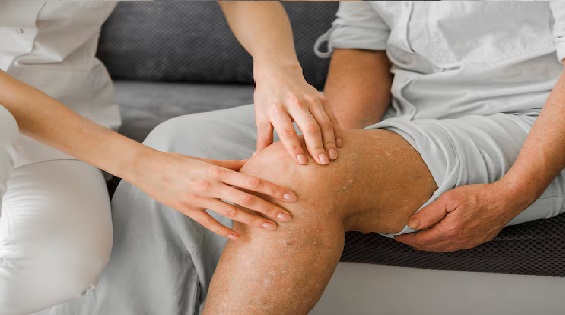
In India, knee discomfort is a prevalent complaint that affects people of all ages. Knee pain can be adequately managed with a variety of non-surgical treatment approaches, while surgery is sometimes necessary. We will examine the signs, frequency, reasons, and non-surgical solutions for treating knee pain in India in this article. Dr. Madhavi Joshi treats knee discomfort at the Nirali A M Naik Charitable Health-Care Facility in Powai, Mumbai, without requiring surgery. In this case, over 95% of knee pain sufferers' procedures were avoided.
Osteoarthritis: The most prevalent cause of knee discomfort, especially in elderly adults, is the deterioration of joint cartilage.
Ligament Injuries: Knee discomfort may result from tears or strains in the MCL or ACL, two ligaments that support the knee.
Meniscus Tears: The knee joint's meniscus, which cushions the joint, can sustain damage that results in pain and restricted movement.
Pain and inflammation: at the front of the knee are symptoms of patellofemoral pain syndrome, which is frequently brought on by overuse or misalignment.
Bursitis: Knee pain may arise from inflammation of the bursae, which are tiny sacs filled with fluid that cushion the knee joint.
Tendonitis: Pain and trouble moving the knee can result from inflammation of tendons, including the patellar tendon.
There are several reasons that knee discomfort might appear, including:
Thankfully, there are several of excellent non-surgical options for treating knee discomfort. Some non-surgical therapy methods include:
Medications: Over-the-counter pain medications, nonsteroidal anti-inflammatory medicines (NSAIDs), and corticosteroid injections can help lessen knee pain and reduce inflammation.
Physical therapy: A physiotherapist's targeted exercises, stretches, and techniques can help to increase the strength, flexibility, and stability of the knee.
Weight management: Retaining a healthy weight helps ease pain and lessen the strain on the knee joints.
Assistive devices: Using walking aids, orthotics, or knee braces help stabilize and support the knee, minimizing pain when moving.
Lifestyle Adjustments: It may be helpful to include low-impact activities like swimming or cycling and to stay away from things that make knee discomfort worse.
Platelet Rich Plasma:
It is among the most effective regeneration treatments. Your blood contains growth factors in the form of platelets. By promoting the formation of new cells, PRP growth factors derived from your own blood can be injected into an injured location to aid in tissue repair. PRP may assist in repairing tissue damage already present in this manner.
Ozone therapy:
Ozone possesses anti-inflammatory and regenerative qualities. Ozone functions as an antioxidant, binds to free radicals in your body, and lowers oxidative stress. Many of the diseases that affect our bodies are brought on by oxidative stress. Because free radicals can harm cells at the cellular level, it also accelerates the aging process. By using ozone as a regenerative medical treatment, the capacity to halt or stop aging is crucial. It's among the anti-aging remedies found in nature.
Non-surgical therapy for knee pain?
Dr. Madhavi Joshi treats knee pain at the Nirali A M Naik Charitable Health-Care Facility using non-surgical methods like ozone therapy and platelet rich plasma therapy.One of the best pain clinic in Powai Mumbai for treating common orthopedic issues as well as other issues including headaches, cancer pain, sports injuries, joint pain, etc. is Nirali A M Naik Charitable Health-Care Facility.
A number of risk factors may necessitate knee replacement surgery. Among them are:
Age: As knee joint wear and tear tends to worsen with age, being older is a common risk factor.
Osteoarthritis: One of the main causes of the necessity for a knee replacement is osteoarthritis, a degenerative joint disease. It results in the knee joint's cartilage gradually breaking down, which hurts and stiffens the knee.
Rheumatoid arthritis: Due to joint degeneration and inflammation, people with rheumatoid arthritis, an inflammatory disease that affects the joints, may need knee replacement surgery.
Gender: Knee replacement surgery is more common among women, especially those over 50. This greater risk could be attributed to anatomical abnormalities and hormonal variables.
Obesity: Carrying too much weight around puts extra strain on the knee joints, raising the possibility of joint degradation and the requirement for a knee replacement.
Trauma or injury: A history of knee trauma or injury, such as a fracture or torn ligament, can hasten joint deterioration and increase the likelihood of requiring surgery.
Genetics: A person's chance of needing knee replacement surgery may be influenced by genetic predispositions to diseases like osteoarthritis.
Sedentary lifestyle or lack of physical : activity can exacerbate weakening muscles and joint instability, which raises the possibility of knee issues that require surgery.
Other medical conditions: A number of illnesses, including gout, bone dysplasia, and avascular necrosis, can worsen knee joint degeneration and increase the likelihood of requiring a knee replacement.
Factors related to the workplace: Jobs or activities that put the knees under repeated strain, like heavy lifting or extended kneeling, can aggravate joint wear and tear and raise the risk of needing knee replacement surgery
Medical evaluation: A thorough examination of the patient's individual and family medical histories will be performed by the physician.
Diagnostic tests: To determine whether the patient is fit for the procedure, a number of laboratory, diagnostic, and imaging tests will be carried out.
Medication review: If necessary, the best doctor may start or stop the patient's present medications. Patients need to let their doctor know what their current prescription schedule is.
Health discussion: To ensure that their health status is fully understood, patients are advised to explain any drugs they are taking and any chronic diseases they may have.
Lifestyle: It is recommended to stop smoking a few weeks prior to the treatment because it may affect the healing process.
Physical activity: To promote post-operative healing, it is advised to engage in regular exercise prior to the treatment.
Preoperative checks: The doctor and care team will assess the absence of allergies to drugs and latex used during surgery.
Administration of anesthesia: In order to guarantee the patient's comfort throughout the process, the anesthetist gives anesthesia.
Incision and access: To gain access to the afflicted area, precise incisions are made in and around the knee.
Damaged or injured : knee sections are carefully removed, and the joint is painstakingly prepped for the implantation of replacements.
Prosthesis attachment: Using specialized cement, the physician firmly fastens the prosthesis to ensure a stable and long-lasting fix.
Quality checks and adjustments: To maximize the performance of the new joint, comprehensive mobility checks are conducted in addition to any necessary adjustments and repairs.
Duration of hospital stay: The duration of hospital stay is contingent upon the nature of the procedure that is undertaken.
Activity restrictions: During the early stages of recuperation, patients are recommended to abstain from carrying large objects, participating in physically demanding activities, and operating heavy machinery.
Help arrangements: Until the patient is able to carry out everyday tasks on their own again, plans should be put in place for someone to provide assistance.
Mobility support: To help with movement in the early stages of recuperation, the doctor can advise using a walker or a splint.
Home adjustments: In order to give the patient a more comfortable environment, home alterations could be required.
Recovery schedule: Regaining full weight bearing on the ankle and getting back to your regular activities could take up to 4 months, and a full recovery could take up to 1 year.
Follow-up appointments: Scheduling routine follow-up appointments is essential for keeping an eye on any issues and guaranteeing a speedy recovery.
Pain management: To improve the patient's comfort during the healing process, painkillers will be given.
